Portrait of Martin Millon

About me

I am an observational cosmologist using gravitational lensing to address fundamental questions about the Universe. I am currently an Ambizione fellow of the Swiss National Science Foundation (SNSF) at the University of Geneva. Previously, I was a postdoctoral researcher at Stanford University and ETH Zürich, and I received my Ph.D. from the École Polytechnique Fédérale de Lausanne (EPFL). My research interest mainly focuses on cosmology with strong lensing and image processing. I am also interested in studying the physics of accretion disks with gravitational microlensing.

Besides research, I love spending my weekends exploring the mountains of the French Jura or the Swiss Alps, for climbing, hiking, or skiing.

CV

Research interests

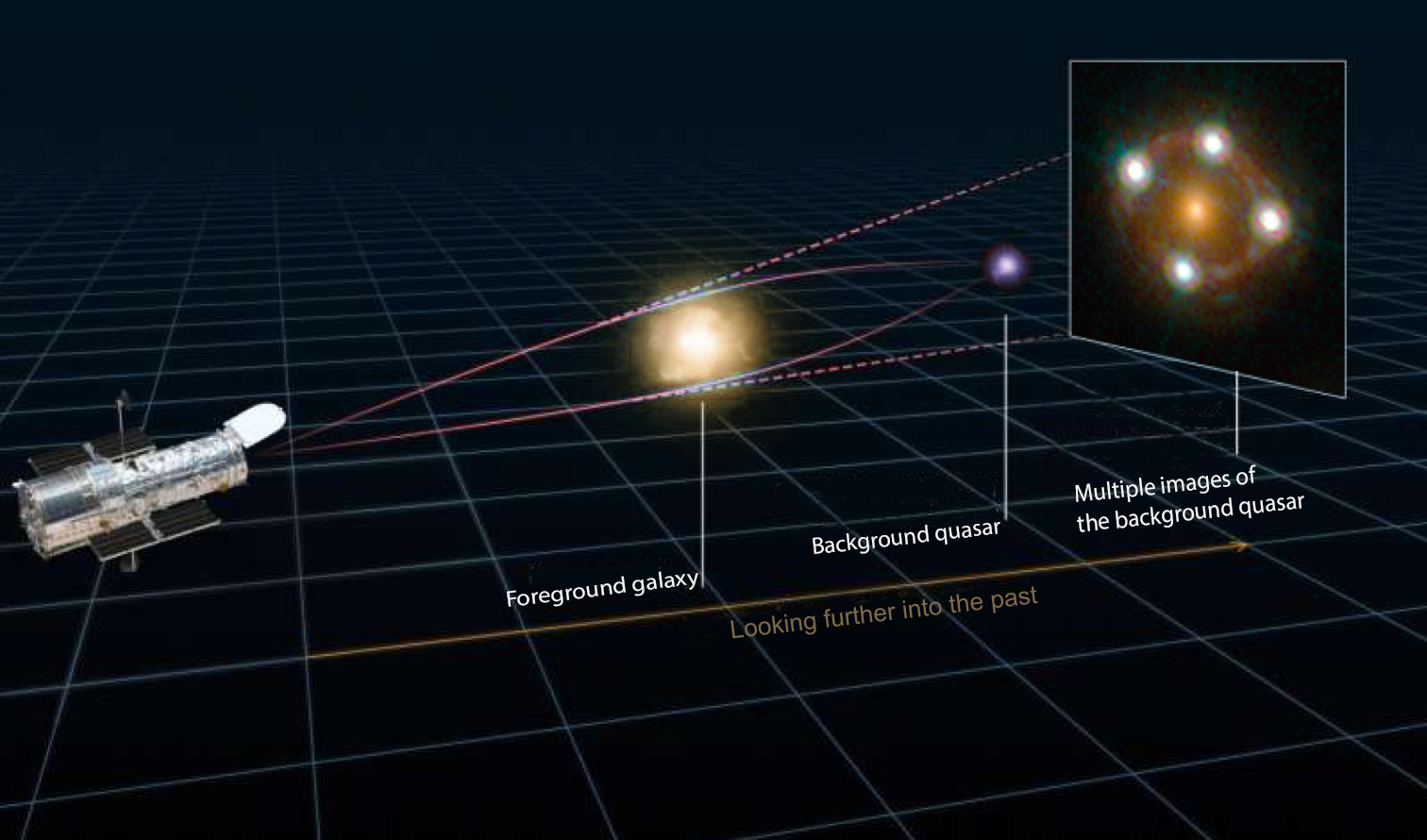
Illustration of strong gravitational lensing of a background quasar

Time-delay Cosmography & the Hubble Constant

As part of the TDCOSMO collaboration, I am studying strongly lensed quasars to measure the Hubble constant, i.e. the expansion rate of the Universe. We are doing this by measuring the time delays between the multiple images of the quasar to obtain precise estimates of the cosmological parameters.

Learn more
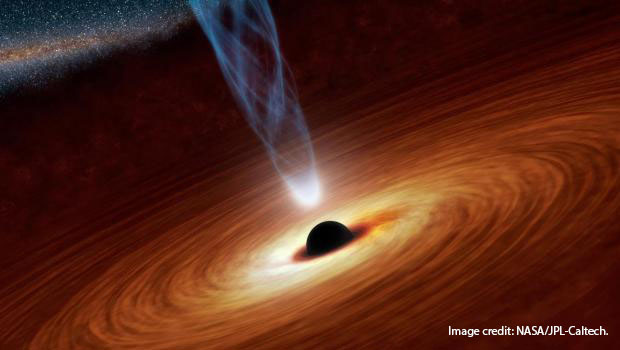
Illustration of an accretion disk around a supermassive black hole

Black holes and accretion disks

My research involves using microlensing to study the structure of accretion disks around supermassive black holes. Microlensing occurs when a star passes in front of one of the multiple images of a lensed quasar. By analyzing this signal, we obtain valuable insights into the accretion disk's characteristics.

Learn more
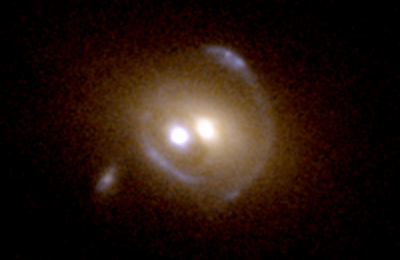
RGB composite image of a lensed quasar host galaxy

Galaxies and Quasars co-evolution

Lensing is a very precise tool to measure the mass of galaxies. I am using this phenomenon to study the relation between quasars and their host galaxies in the distant Universe.

Learn more
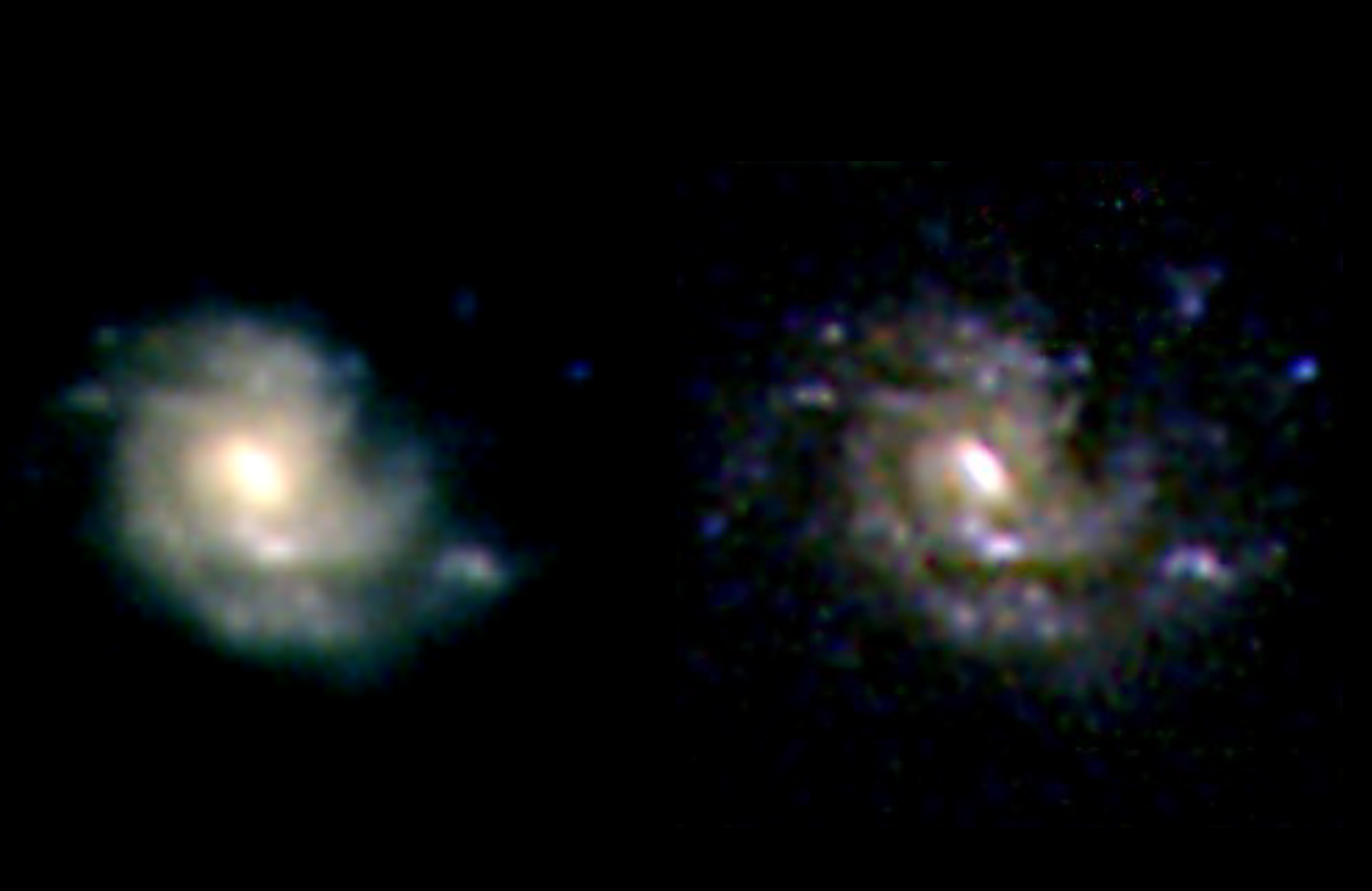
Before and after comparison of image deconvolution on a lensed quasar

Image processing and deconvolution

Atmospheric turbulence blurs the images we are taking from ground-based telescopes. I am interested in developing algorithms to correct for this effect and obtain sharper images.

Learn more

Software

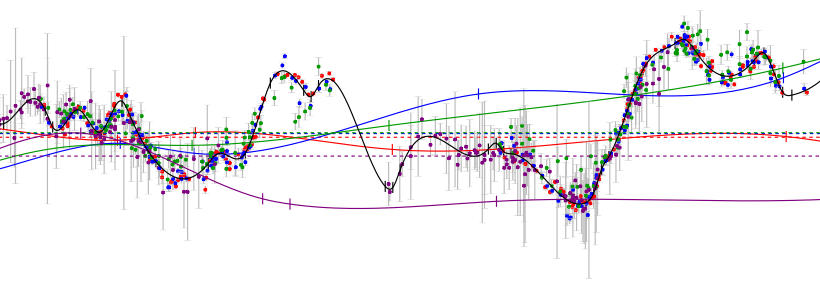
PyCS3 light curve time delay estimation example

PyCS3

PyCS3 is python package for measuring time delays between light curves. It includes a flexible way of modelling microlensing variations, which are often observed in strongly lensed quasars light curves.

PyCS3 repository
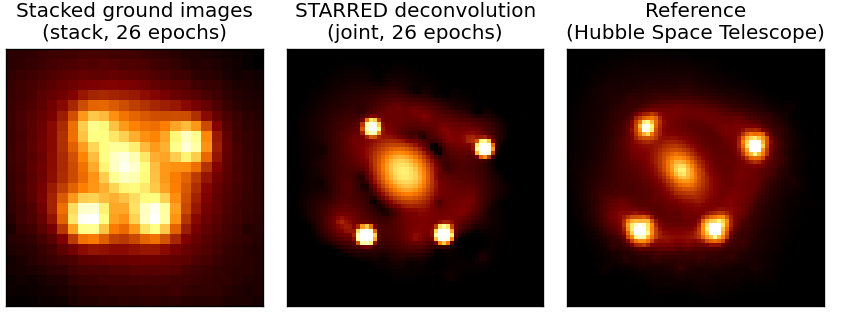
STARRED deconvolution result on lensed quasar DES2038

STARRED

STARRED is an image deconvolution python package. It allows us to obtain sharper images and precise point-source photometry.

STARRED repository